
AI Receptionist for law firms: Everything you need to know
 Researched and Written by
  Reviewed and Edited by
 When the phone rings at a law office, the voice on the other end rarely represents a routine inquiry. It is often someone facing an urgent crisis: a sudden arrest, an injury, a devastating divorce, or a corporate emergency.
In recent months, the legal industry has seen massive interest in automation. Managing partners and solo attorneys alike are asking whether an AI receptionist for law firms can solve the perpetual challenge of missed calls, after-hours intake, and escalating overhead.
Yet beneath the hype lies a crucial question: does automating your front desk protect your firm’s growth, or does it risk alienating the very clients who need you most?
What is an AI receptionist for law firms?
An AI receptionist for law firms is an automated voice platform powered by natural language processing and conversational large language models. Unlike rigid interactive voice response (IVR) phone trees that force callers to press buttons, a modern legal AI receptionist listens to natural speech, identifies the caller’s intent, collects case details, and logs records directly into legal practice management software.
For attorneys juggling court appearances, depositions, and tight filing deadlines, an AI receptionist for attorneys offers the promise of 24/7 responsiveness. It never takes sick leave, handles concurrent calls without busy signals, and captures leads while staff focuses on billable casework.
Is AI truly ready to replace human beings on your firm’s phones?
Some highly respected legal industry professionals argue that conversational AI has arrived and can fully replace front-desk receptionists. They point to sub-second voice latency, multi-language fluency, and instant database logging as proof.
Are they correct? If your sole metric is cost reduction or speed of intake data collection, technology appears compelling. But if your standard is delivering an exceptional client experience, the reality is far more nuanced.
AI is exceptional at structured data collection. It can transcribe names, verify phone numbers, check calendar availability, and confirm geographic jurisdictions. But replacing human beings entirely at the primary point of contact assumes that legal callers behave like standardized forms. They do not.
When a firm removes human oversight completely, it gambles with the single most vulnerable stage of the attorney-client relationship: the first impression.
The intake trap: When automated phone agents fail the client experience test
Consider what happens when a prospective client tests an automated intake flow. In recent field evaluations across several legal answering platforms, the results were concerning.
Imagine a caller who is distressed and immediately asks to speak with a live human being. Instead of accommodating that request, an inflexible system continues running down its checklist: “I understand, but first, what was the date of your incident?”
When the caller reiterates the urgency of their situation, access to a person is still denied because the algorithm has not satisfied its required input fields. If the caller finally insists that they cannot proceed without speaking to a real person, poorly configured systems reach a dead end and terminate the call.
Would any managing partner who prioritizes client experience feel comfortable allowing that interaction to serve as their firm’s front door?
Forcing callers through an unyielding automated script creates immense friction. If an automated system refuses to route an urgent caller to a human, it sends a clear signal: the firm values its internal efficiency over the client’s peace of mind.
Caller psychology: Why legal intake demands genuine connection
How does it feel when you reach an automated answering machine or an endless routing tree when you are in distress? Does that interaction make you feel valued, or does it make you feel dismissed?
When people call a legal practice, they are anxious, overwhelmed, and searching for reassurance. They want to know that someone capable has taken control of their problem.
If callers reach out during one of the most stressful moments of their lives, removing the human element entirely rarely improves that experience. A computer voice, no matter how natural the text-to-speech cadence sounds, cannot feel authentic empathy. It can simulate scripted compassionate phrases, but callers recognize simulated sympathy immediately. At the moment it matters most, synthetic sympathy feels hollow.
The real answer is not choosing between technology and people. It lies in evaluating whether the true priority should be replacing staff or deploying technology to support faster response times, better training, and stronger human connection.
Which AI answering service works with law firms?

Law firm leaders frequently ask: Which AI answering service works with law firms without destroying client goodwill?
The answer lies in understanding the difference between unassisted bots and collaborative intake systems. When evaluating an AI answering service for lawyers, firms must look beyond generic sales pitches and assess specific legal safeguards.
Essential capabilities of the best AI answering service for law firms
- Instant emergency escalation
The AI agent must recognize distress signals, crisis keywords (e.g., arrest, injury, hospital, restraining order), and caller frustration. It must execute warm transfers to on-call attorneys immediately rather than forcing the caller to finish a questionnaire. - Instant routing
If a caller asks for a person, the system must never trap them. The best AI answering service for law firms respects caller autonomy and immediately transfers the line or schedules a guaranteed callback. - Practice-specific conflict and qualification rules
It should understand the difference between a qualified personal injury lead and an out-of-jurisdiction inquiry, routing each accordingly. - Software integration
Top platforms synchronize contact records, consultation appointments, and call summaries directly into CRMs without human data-entry bottlenecks.
The smarter approach: Combining AI speed with human touch
Technology should eliminate administrative waste, not wall off your legal practice from the public. Rather than treating an automated voice system as a replacement for human empathy, high-performing firms use automation as an intelligent triage partner.
Under this model, the automated system handles after-hours overflow, screens repetitive spam, qualifies simple inquiries, and gathers preliminary intake information. The moment a case requires nuanced judgment, high-stakes consultation, or immediate reassurance, the call bridges directly to qualified personnel.
This hybrid approach ensures your practice never misses a lead at 2:00 AM, while ensuring that prospective clients always feel heard, respected, and protected.
Elevate your law firm’s front desk with Squirrels.ai
If you want the efficiency of modern automation without sacrificing the personal connection your clients deserve, consider Squirrels.ai’s AI Receptionist
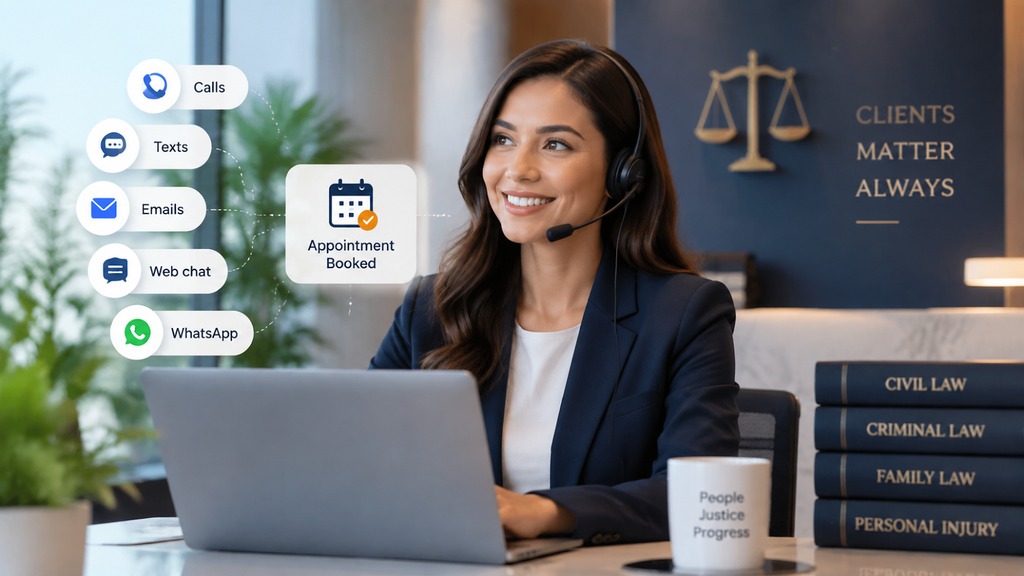
Designed to function as an intelligent front-desk partner, the AI Receptionist answers inbound inquiries instantly around the clock, pre-screens case details, and books qualified consultations directly into your calendar.
Unlike rigid automated systems that frustrate callers, Squirrels.ai is built to prioritize client dignity. It handles calls naturally, identifies urgency, and seamlessly escalates sensitive or high-value matters directly to your team.
Discover how your firm can capture every opportunity while keeping human trust at the center of your practice. Request a demo with Squirrels.ai!
Frequently Asked Questions (FAQs)
Yes, provided the service adheres to strict data privacy standards, enterprise-grade encryption, and confidentiality protocols compliant with legal industry ethics rules. Ensure your vendor does not use client call data to train public models.
Most firms see substantial savings compared to traditional 24/7 call centers or full-time night shifts. Automated receptionists eliminate missed lead opportunities while capturing complete intake data for a predictable subscription cost.
Advanced conversational agents analyze caller sentiment and key phrases. When emergency keywords or high distress levels are detected, the system immediately follows custom routing protocols to alert an on-call attorney.